.png)
The School Bus Driver Shortage Is Reshaping Transit — And Training Is Ground Zero


Across the US, transit agencies and school districts are facing a growing crisis:
There aren't enough qualified bus drivers.
What was once a hiring challenge has evolved into a much deeper issue, a structural workforce shortage that is reshaping how drivers must be trained, certified, and retained. Recent national data indicates:
More than 90% of school districts report driver shortages impacting operations (The Statehouse News Bureau)
Employment in school bus driving remains ~9.5% below 2019 levels (School Bus Fleet)
65% of transportation leaders reported shortages in 2023, with many still struggling to rebuild staffing (Education Commission of the States)
Nationwide, the workforce has declined by 12–15% since 2019 (sgrowthpartners.com)
The impact is operational and immediate. Districts are:
Cutting or shortening routes (School Bus Fleet)
Modifying school start times to match staffing capacity (School Bus Fleet)
Paying millions in overtime to compensate for vacancies (Houston Chronicle)
In some cases, transportation disruptions are now directly linked to student absenteeism and longer commute times (Axios).
This is no longer a staffing inconvenience, it's an infrastructure challenge that is affecting access to education and mobility.
Structural Challenges Reshaping Training
The shortage isn’t driven by one issue, it’s the convergence of several.
Aging Workforce
The average school bus driver is 56 years old, with nearly half aged 55–69 (sgrowthpartners.com).
This creates:
Retirement-driven attrition
Limited long-term pipeline growth
Operational Adjustments
Shortages are forcing districts to:
Combine routes
Extend ride times
Modify schedules (School Bus Fleet)
Labor Market Competition
Even when recruitment improves, retention remains fragile. Potential hires often choose:
Trucking
Delivery
Flexible gig work
over bus driving roles (The Washington Post)
Licensing Bottlenecks
Even trained candidates may wait weeks or months to become deployable due to CDL testing capacity constraints — slowing workforce readiness.
The New Reality: Training Is Now the Bottleneck
Historically, driver training was designed around safety and certification depth. Today, the pressure has shifted.
Training must now produce safe drivers in larger volumes, faster. However, becoming a bus driver is neither quick, nor simple.
New entrants must complete:
Commercial Driver’s License (CDL) requirements
Passenger and school bus endorsements
Drug testing
Classroom and behind-the-wheel training
Background checks
Physical exams
These requirements create significant friction in the pipeline — and the economical impacts are substantial.
The Hidden Economic Impact
Unfilled Driver Roles Create Cascading Costs
Each vacant route can cost $450–$650 per week in overtime and rerouting (sgrowthpartners.com)
At scale, this translates into:
Route cancellations
Reduced access to education
Budget strain
Houston ISD alone spent $4.5 million in overtime in a single year due to shortages (Houston Chronicle)
What It Traditionally Costs to Train a School Bus Driver
Across U.S. school districts and contractor fleets, the average investment per new driver typically ranges from $2,000 to $6,000, and can exceed $8,000–$10,000 when paid training is included.
Data shows:
Traditional CDL training alone can cost individuals $4,000–$7,000 if not district-sponsored (Yahoo)
Many districts now cover these costs entirely to attract candidates (HERE Knoxville)
This aligns with broader workforce realities:
For every 10 applicants, only one completes the hiring process (sgrowthpartners.com)
The Meta-Shift: From Safety Bottleneck to Capacity Challenge
For decades, the challenge was ensuring driver safety through rigorous training.
Today, the challenge is ensuring enough safe drivers exist to operate the system at all.
Training must now balance:

Traditional Focuses
Depth
Compliance
Standardization

The Challenges
Time Constraints
Training can no longer take months to produce route-ready drivers
Increased Demand
Programs must scale to train larger volumes of drivers consistently across locations
Diverse Scenarios
One-size-fits-all instruction does not accomodate diverse learners, rural conditions, and varying operational realities.

Emerging Focuses
Speed
Scalability
Flexibility
The Industry Is Beginning to Adapt
Forward-looking agencies are beginning to explore:

Hybrid Learning

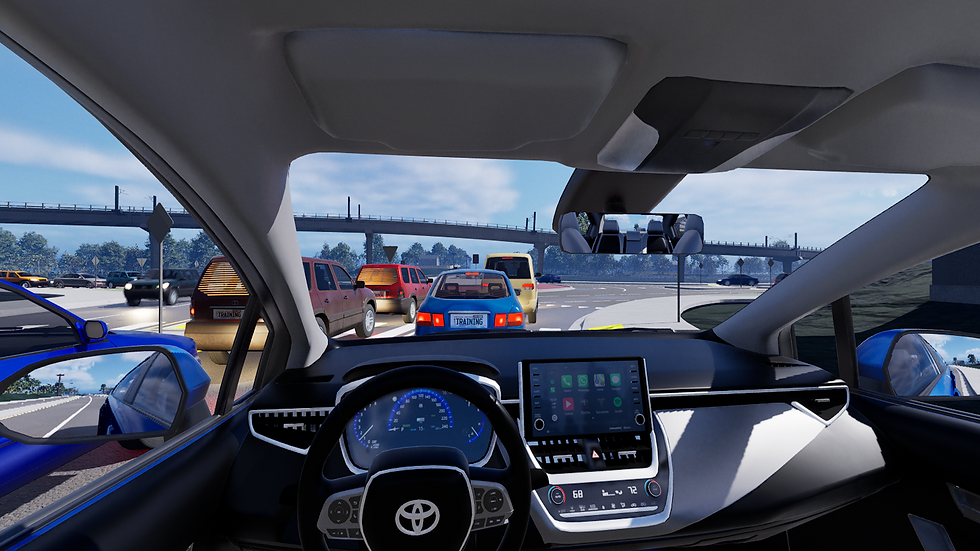
Simulation-based Training

Remote Coursework

Mobile Learning Platforms
These approaches are helping reduce onboarding time while maintaining safety outcomes.
Technology adoption is already accelerating across transportation operations — with 68% of districts now using digital platforms for routing and rider tracking (School Bus Fleet)
Meeting the Moment
Training is the Next Frontier

As the workforce landscape evolves, the future of transit will depend on modernizing how drivers are prepared, not just recruited.
This is where next-generation approaches, including mixed reality, simulation-based learning, and modular training ecosystems are beginning to redefine what’s possible. Companies like Drivers of Tomorrow are helping agencies respond to today’s reality by making training:
Faster
More scalable
More affordable
More adaptive to real-world challenges
—without compromising safety.
How Drivers of Tomorrow Can Help
Navigating the demands of an evolving training landscape might seem daunting, but it's what Drivers of Tomorrow does best. Whether utilizing mixed reality to reduce costs and expedite training, or developing digital recreations of real-world scenarios for safer, more immersive learning, DoT has led the way for modern driver training solutions. The impact is clear: our clients consistently achieve bigger savings, higher pass rates, and better prepared drivers.
Because the future of transportation won’t be solved by hiring alone.
It will be solved by training differently.



Comments